
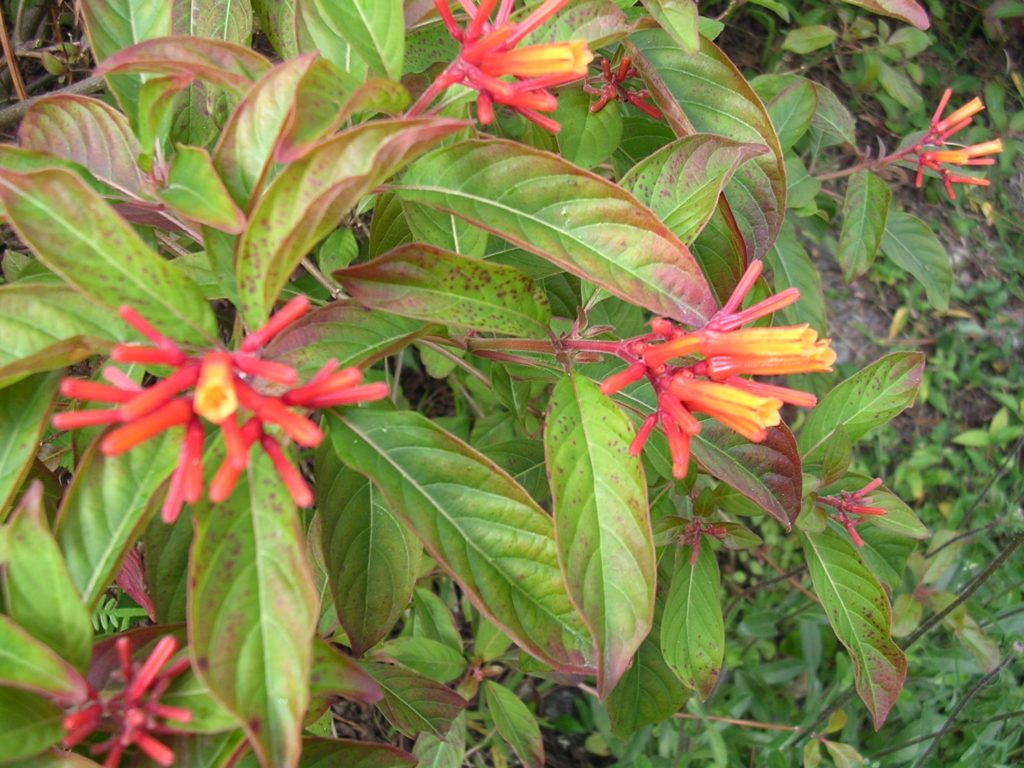
Firebush: A Bright, Wildlife-Friendly Garden Shrub
Firebush (Hamelia patens) is a tropical shrub known for its vivid flowers and appeal to pollinators. Clusters of narrow, tubular blooms appear in shades of orange and red, often attracting hummingbirds and butterflies. In warm climates, firebush can become a substantial shrub; in cooler regions, it is best grown in a container or treated as an annual.
How to Identify Firebush
Firebush has soft, oval leaves that typically grow in groups of three around the stems. The foliage may take on reddish tones, especially in sunny conditions or as temperatures cool. Its tubular flowers bloom over a long season in warm weather. Small berries may follow, changing color as they mature.
The plant is native to parts of the tropical Americas, including southern Florida. It is not winter-hardy in New Jersey, where freezing temperatures prevent it from surviving outdoors year-round.
Growing Firebush
- Light: Full sun encourages abundant flowering, though firebush can tolerate some partial shade.
- Soil: Plant it in well-drained soil. Avoid locations where water collects around the roots.
- Water: Water regularly while the plant is getting established. Once established, it can tolerate periods of dry weather, but container-grown plants may need more frequent watering.
- Pruning: In frost-free climates, prune to shape or control size. Remove dead or damaged growth as needed.
In Middlesex County and elsewhere in New Jersey, grow firebush in a pot that can be moved indoors before frost. Place it in a bright, warm location during winter, and reduce watering while growth slows. Alternatively, enjoy it outdoors during the warm months as a seasonal container plant.
Firebush and Wildlife
The bright, nectar-rich flowers make firebush a lively addition to a pollinator garden in warm climates. Hummingbirds and butterflies may visit the blooms, and the plant’s berries can provide food for wildlife. If planting for habitat, choose species suited to the local climate and native ecosystem; firebush is tropical and should not be considered a native New Jersey shrub.
Is Firebush Right for Your Garden?
Firebush is a good choice for gardeners seeking bold color and a plant that draws attention from pollinators. Its main limitation in the Northeast is cold sensitivity. With a sunny spot outdoors in summer and protection from frost, New Jersey gardeners can still enjoy its colorful flowers without expecting it to survive the winter in the ground.
6 Essential Tips for Growing Vibrant Firebush Plants
- Plant firebush in full sun for the best flowering.
- Use well-drained soil to prevent root problems.
- Water regularly while young; established plants tolerate drought.
- Prune lightly to shape it or control its size.
- Expect bright flowers to attract hummingbirds and butterflies.
- Protect firebush from frost in cooler climates.
Plant firebush in full sun for the best flowering.
For the best flowering, plant firebush in a spot that receives full sun for most of the day. Plenty of direct sunlight encourages abundant, vibrant blooms and helps the plant grow vigorously. In hot climates, firebush can tolerate some light shade, but too much shade may reduce flowering.
Use well-drained soil to prevent root problems.
Plant firebush in well-drained soil to keep excess water from pooling around its roots. Soil that stays soggy can lead to root problems and weaken the plant. If your garden soil drains poorly, grow firebush in a raised bed or a container with drainage holes, and let the soil dry slightly between waterings.
Water regularly while young; established plants tolerate drought.
Water firebush regularly while it is young to help its roots establish, keeping the soil evenly moist but not waterlogged. Once established, the plant can tolerate periods of drought, though occasional watering during prolonged dry spells can help it stay healthy and bloom well.
Prune lightly to shape it or control its size.
Prune firebush lightly to maintain its shape or keep it from outgrowing its space. Trim back stray or overly long stems as needed, taking care not to remove too much at once. In colder regions, wait until the plant is actively growing before pruning, and remove any frost-damaged growth after the risk of cold weather has passed.
Expect bright flowers to attract hummingbirds and butterflies.
Firebush’s bright, tubular flowers are more than a colorful garden feature—they’re a natural invitation to hummingbirds and butterflies. Plant it in a sunny spot to encourage abundant blooms, and enjoy watching these pollinators visit throughout the flowering season. In cooler climates, grow firebush in a container and bring it indoors before frost.
Protect firebush from frost in cooler climates.
Firebush is sensitive to cold and will not survive freezing temperatures, so protect it from frost in cooler climates. In New Jersey, grow it in a container and bring it indoors to a bright, warm location before the first frost in fall. If it’s planted in the ground, treat it as a seasonal plant or move it to a sheltered, frost-free space when temperatures begin to drop.