
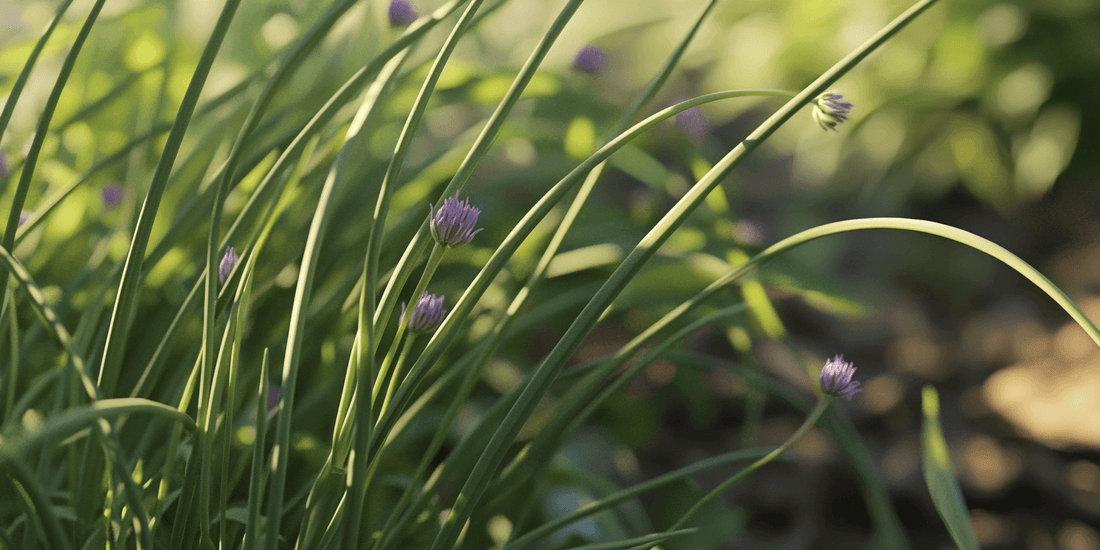
Growing Chives: A Flavorful, Easy-Care Herb
Chives (Allium schoenoprasum) are hardy perennial herbs prized for their mild onion flavor and slender, green leaves. A member of the allium family, which also includes onions and garlic, chives are useful in the kitchen and attractive in the garden. Their rounded clusters of purple flowers also draw pollinators in spring and early summer.
Where to Plant Chives
Chives grow best in full sun and fertile, well-drained soil, though they can tolerate partial shade. They adapt well to garden beds, containers, and herb gardens. Choose a spot where the clumps can remain for several years; established plants gradually grow wider and can be divided when they become crowded.
Plant chives in spring after the soil can be worked. They can be grown from seed, but starting with a small plant or division is usually quicker. Space plants about 8 to 12 inches apart to give the clumps room to develop.
Basic Care
- Water: Keep the soil evenly moist while plants are getting established. Once established, water during dry periods.
- Soil: Use well-drained soil enriched with compost. Avoid sites that stay waterlogged.
- Sunlight: Provide at least six hours of direct sun for vigorous growth, if possible.
- Maintenance: Cut leaves regularly to encourage fresh growth. Remove faded flower heads if you want to limit self-seeding.
- Division: Divide crowded clumps every few years, preferably in spring or fall. Replant the divisions and water them well.
Harvesting and Using Chives
Once a plant is established, snip leaves close to the base with clean scissors. Harvest a few leaves at a time, leaving enough foliage for the plant to continue growing. Chives are best used fresh, and their delicate flavor pairs well with eggs, potatoes, salads, soups, and soft cheeses. Add them near the end of cooking to preserve their flavor.
The purple flowers are edible, too. Separate the florets and sprinkle them over salads or other dishes for a mild onion taste and a splash of color.
Common Growing Challenges
Chives are generally easy to grow, but poor drainage can lead to problems such as root rot. Give plants enough room for air circulation and avoid consistently wet soil. If leaves become tough or plants look crowded, divide the clump and harvest the new growth as it appears.
Chives may reseed if flower heads are left to mature. This can be useful if you want more plants, but trimming the flowers before seeds form helps keep the garden tidy.
Chives and Garlic Chives
Common chives have hollow, round leaves and a mild onion flavor. Garlic chives (Allium tuberosum) are a related but different plant, with flat leaves and a noticeable garlic flavor. Both are edible and easy to grow, but garlic chives can spread readily by seed, so remove flower heads if you do not want seedlings.
A Garden Favorite
With their fresh flavor, attractive blooms, and simple care needs, chives are a rewarding choice for gardeners of all experience levels. Plant them near the kitchen for easy harvesting, or include them in a pollinator-friendly garden. Keep chives away from pets: plants in the allium family can be harmful to cats and dogs if eaten.
8 Tips for Growing Healthy, Productive Chives
- Plant chives in full sun for best growth.
- Use well-drained soil rich in organic matter.
- Water when the top inch of soil feels dry.
- Space plants about 6 inches apart.
- Trim leaves often to encourage fresh growth.
- Cut flower stalks to keep leaves productive.
- Divide clumps every few years to refresh plants.
- Harvest leaves near the base with clean scissors.
Plant chives in full sun for best growth.
Plant chives in a spot that receives at least six hours of direct sunlight each day for the best growth. Full sun encourages strong, leafy plants and supports a flavorful harvest. Chives can tolerate partial shade, but they may grow more slowly and produce fewer leaves.
Use well-drained soil rich in organic matter.
Chives grow best in well-drained soil enriched with organic matter, such as compost. Good drainage helps prevent soggy conditions that can damage the roots, while organic matter improves soil structure and helps retain the moisture and nutrients chives need for healthy growth.
Water when the top inch of soil feels dry.
Water chives when the top inch of soil feels dry to the touch. Check the soil near the base of the plant, then water thoroughly so moisture reaches the roots. Chives prefer evenly moist, well-drained soil, but avoid letting the plant sit in soggy soil, which can encourage root problems.
Space plants about 6 inches apart.
Space chive plants about 6 inches apart to give each clump room to grow while keeping the planting full and tidy. Good spacing also allows air to circulate around the leaves, making it easier to care for and harvest the plants.
Trim leaves often to encourage fresh growth.
Trim chive leaves regularly to encourage the plant to produce fresh, tender growth. Use clean scissors to snip leaves close to the base, taking only what you need and leaving enough foliage for the plant to keep growing. Frequent harvesting also helps prevent the leaves from becoming tough and keeps your chive plant looking neat.
Cut flower stalks to keep leaves productive.
Cut chive flower stalks as soon as the blooms fade to help the plant put its energy into producing fresh, tender leaves. Snip the stalks close to the base with clean scissors, and continue harvesting leaves as needed. The flowers are edible, so you can enjoy them before trimming if you like.
Divide clumps every few years to refresh plants.
Divide chive clumps every few years to keep them healthy and productive. In spring or fall, lift the clump, gently separate it into smaller sections with roots attached, and replant the divisions in well-drained soil. Water them thoroughly after planting to help them settle in and encourage fresh growth.
Harvest leaves near the base with clean scissors.
To harvest chives, use clean, sharp scissors to snip the leaves close to the base of the plant. Cutting near the base encourages fresh growth and helps keep the clump tidy. Take only what you need, and leave enough leaves so the plant can continue growing.