
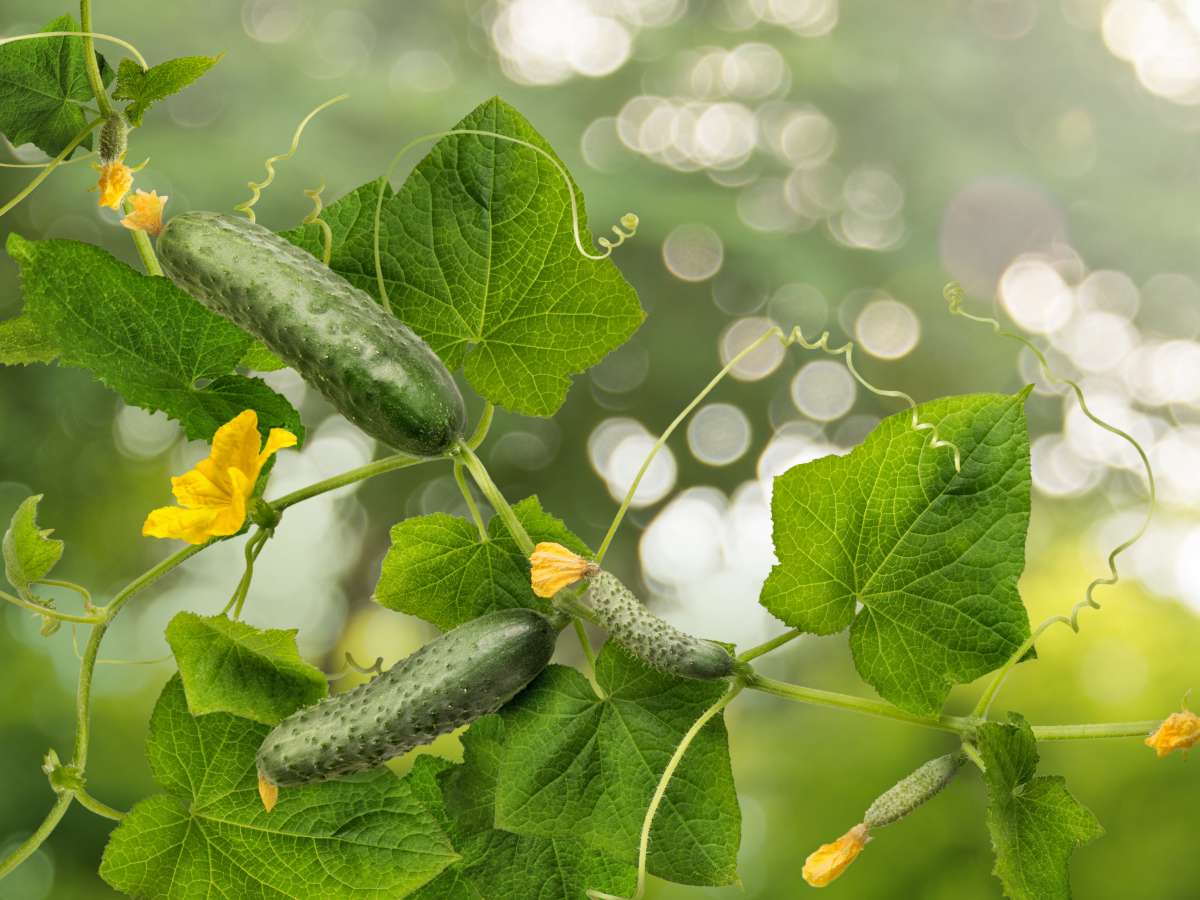
How to Grow Cucumber Plants
Cucumbers are warm-season vegetables that grow quickly and produce abundantly when given plenty of sun, consistent moisture, and room to spread. They can be grown in garden beds, raised beds, or containers, with vines trained on a trellis to save space and keep fruit off the ground.
Choose a Variety
Cucumber varieties differ in size, shape, flavor, and best use. Slicing cucumbers are eaten fresh, while pickling varieties are often shorter and have firm flesh. Some varieties grow long vines; others are compact or bush types suited to small gardens and containers.
Check the seed packet or plant label for information about disease resistance and pollination. Most cucumbers need bees or other insects to move pollen from male to female flowers. Some varieties are parthenocarpic, meaning they can set fruit without pollination, and are often useful in greenhouses or other settings where pollinators have limited access.
When and Where to Plant
Cucumbers need warm weather and do not tolerate frost. In New Jersey, plant seeds outdoors after the danger of frost has passed and the soil has warmed—usually in late spring. Cool soil can slow germination and lead to poor growth. For an earlier start, sow seeds indoors in individual pots about three to four weeks before transplanting. Handle seedlings gently, since cucumbers do not like having their roots disturbed.
Choose a spot that receives at least six to eight hours of direct sunlight each day. The soil should drain well and be rich in organic matter. Before planting, work compost into the bed. If you are unsure about soil conditions or fertilizer needs, a soil test can help guide your choices.
Planting and Spacing
Sow seeds about 1 inch deep. For vining varieties, space plants roughly 12 to 18 inches apart when growing them on a trellis. If the vines will spread along the ground, allow more room between rows. Follow the seed packet’s directions, as spacing can vary by variety. Thin seedlings after they emerge, keeping the strongest plants.
A sturdy trellis can support vining cucumbers and improve airflow. Guide young vines onto the support as they grow, securing them loosely if needed. Bush varieties may need less space, but they still benefit from good air circulation.
Watering and Feeding
Keep the soil evenly moist throughout the growing season. Cucumbers have shallow roots, so they can dry out quickly, especially during hot weather or when grown in containers. Water deeply at the base of the plant, preferably in the morning. Avoid frequent overhead watering, which can leave foliage wet and encourage disease.
A layer of organic mulch can help retain soil moisture, suppress weeds, and reduce soil splashing onto leaves. Once plants begin to flower and set fruit, steady watering is especially important. Irregular moisture can contribute to bitter-tasting fruit or misshapen cucumbers.
Healthy garden soil may provide much of what cucumber plants need. If growth is weak, use a balanced fertilizer according to its label. Avoid overdoing nitrogen: too much can produce lots of leaves and fewer cucumbers.
Flowers and Fruit
Cucumber plants typically produce separate male and female flowers. The female flower has a small, cucumber-shaped swelling behind the blossom. Bees and other pollinators transfer pollen between flowers, allowing fruit to develop. Protect pollinators by avoiding insecticide use on blooming plants, and always follow product labels when any pesticide is used.
If flowers appear but fruit does not develop, cool or rainy weather may be limiting pollinator activity. Poor fruit set can also result from insufficient sunlight or stress from dry soil. Give plants time to establish, maintain even moisture, and encourage pollinators with a variety of flowering plants in the garden.
Common Problems
Cucumber beetles can feed on leaves and flowers and may spread plant diseases. Inspect plants regularly, especially when they are young, and remove pests by hand when practical. Row covers can protect seedlings, but remove them when flowers need access to pollinators unless you are growing a variety that sets fruit without pollination.
Powdery mildew appears as a white, powdery coating on leaves. Downy mildew can cause angular yellow or brown patches, often appearing first on older foliage. Reduce disease risk by choosing resistant varieties, providing good spacing and airflow, watering at the soil level, and removing badly diseased plant material. Rotate cucumbers and related crops to a different part of the garden each year when possible.
Weeds compete for water and nutrients, so remove them while they are small. Take care when cultivating near cucumber plants because their roots are shallow.
Harvesting Cucumbers
Harvest cucumbers while they are firm and before seeds become large and tough. The ideal size depends on the variety and how you plan to use the fruit; check the seed packet for guidance. Pickling cucumbers are generally harvested smaller than slicing types. Use scissors or pruners to cut fruit from the vine rather than pulling, which can damage the plant.
Check plants frequently during peak production. Regular harvesting encourages continued fruiting, while overripe cucumbers left on the vine can slow the formation of new fruit. Store harvested cucumbers in the refrigerator and use them while they are fresh.
Growing Cucumbers in Containers
Compact or bush varieties are good choices for containers. Use a pot with drainage holes that holds at least 5 gallons of soil, and fill it with quality potting mix rather than garden soil. Place the container in full sun, provide a trellis if the variety needs one, and check moisture often. Containers dry out faster than garden beds, so regular watering is essential.
A Rewarding Garden Crop
With warm soil, full sun, steady moisture, and regular harvesting, cucumber plants can provide a generous crop throughout summer. Choose a variety suited to your space, watch for pests and disease, and enjoy the harvest fresh, in salads, or preserved as pickles.
5 Essential Tips for Growing Healthy Cucumber Plants
- Plant cucumbers in full sun.
- Wait until frost danger has passed.
- Use well-drained soil enriched with compost.
- Water deeply and keep soil evenly moist.
- Give vines a trellis to climb.
Plant cucumbers in full sun.
Plant cucumbers in a spot that gets at least six to eight hours of direct sunlight each day. Full sun gives these warm-season plants the energy they need to grow strong vines, produce flowers, and set fruit. Choose an open location with good airflow, and keep in mind that plants in partial shade may grow more slowly and produce fewer cucumbers.
Wait until frost danger has passed.
Wait to plant cucumbers outdoors until the danger of frost has passed and the soil has warmed. Cucumbers are sensitive to cold, and frost can damage or kill young plants. Planting in warm conditions helps seeds sprout and seedlings establish more quickly.
Use well-drained soil enriched with compost.
Cucumber plants grow best in well-drained soil enriched with compost. Good drainage helps prevent waterlogged roots, while compost adds organic matter and supports healthy growth. Before planting, mix compost into the soil, then water consistently to keep it evenly moist—not soggy.
Water deeply and keep soil evenly moist.
Water cucumber plants deeply so moisture reaches their roots, and aim to keep the soil evenly moist throughout the growing season. Cucumbers have shallow roots and can dry out quickly, especially during hot weather, so check the soil regularly and water when the surface begins to dry. Water at the base of the plants in the morning to help keep leaves dry and reduce the risk of disease. Consistent moisture also supports healthy growth and helps prevent bitter or misshapen fruit.
Give vines a trellis to climb.
Give cucumber vines a sturdy trellis to climb as they grow. Vertical support saves garden space, improves airflow around the leaves, and keeps cucumbers off the soil, helping them stay cleaner and easier to harvest. Guide young vines toward the trellis and loosely secure them if needed.