
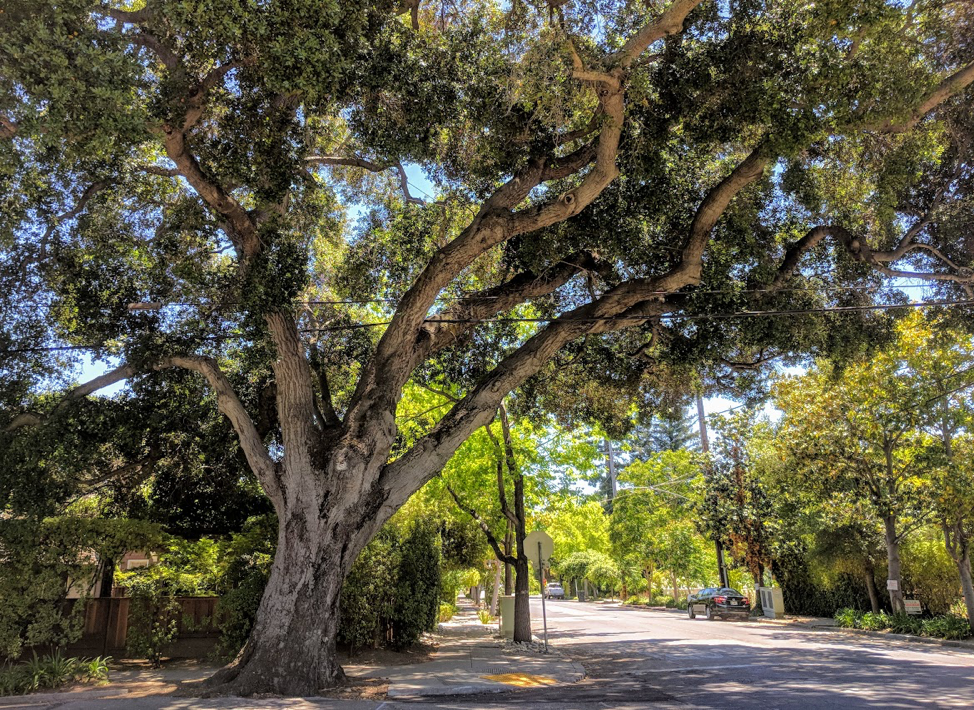
Coastal Live Oak: An Iconic Evergreen of California
The coastal live oak (Quercus agrifolia) is a broadleaf evergreen tree native to the coastal regions of California and northern Baja California. Its spreading canopy, sturdy branches, and year-round foliage make it a defining feature of many California landscapes. Though it is sometimes called the California live oak, it is distinct from other live oaks, including the southern live oak (Quercus virginiana) of the southeastern United States.
Appearance and Growth
Coastal live oaks typically grow about 20 to 70 feet tall, with a broad, rounded crown that can spread even wider. Mature trees often develop thick, gnarled trunks and strong, low-growing limbs. Their leathery leaves are dark green above and lighter underneath, with edges that may be smooth or toothed. Despite being evergreen, the trees gradually shed old leaves as new growth appears, usually in spring.
The tree produces acorns, generally in autumn. These provide food for birds and mammals, including jays, woodpeckers, squirrels, and deer. Its sturdy branches and dense foliage also offer shelter and nesting habitat for wildlife.
Where It Grows
In the wild, coastal live oak grows in woodlands, foothills, and coastal valleys, often alongside other native trees and shrubs. It is adapted to California’s Mediterranean climate, with mild, wet winters and long, dry summers. Once established, it can tolerate seasonal drought, although young trees need regular water while their roots develop.
Coastal live oak is best suited to regions with a climate similar to its native range. It is generally not a good choice for places with severe winter cold, such as much of New Jersey. Gardeners outside its range can explore locally native oak species that are better adapted to regional conditions.
Planting and Care
Give a coastal live oak plenty of room. Its wide canopy and extensive root system can conflict with buildings, paved areas, and underground utilities when the tree is planted too close. Choose a sunny location with well-drained soil, and avoid sites where the roots will be repeatedly disturbed or the soil compacted.
- Water: Water young trees deeply during dry periods. Established trees generally need little supplemental irrigation in suitable climates. Frequent summer watering can encourage root problems.
- Mulch: Apply a layer of organic mulch over the root zone, keeping it several inches away from the trunk.
- Pruning: Prune only when needed to remove dead, damaged, or crossing branches or to address a safety concern. Avoid excessive pruning, which can weaken the tree and spoil its natural shape. For large branches, consult a qualified arborist.
- Soil and roots: Protect the area beneath the canopy from heavy traffic, excavation, and changes in grade. A mature oak’s health depends on preserving its root zone.
Wildlife and Landscape Value
Coastal live oak is valuable well beyond its role as a shade tree. Its acorns support wildlife, while its branches and foliage provide habitat throughout the year. As a long-lived native species, it can help maintain local ecological relationships and contribute to the character of California’s oak woodlands.
Because it grows large and may live for centuries, coastal live oak is best planted where it can remain undisturbed as it matures. A well-sited tree can become a lasting landscape feature and a valuable source of shade and habitat.
Common Concerns
Like other oaks, coastal live oak can be affected by insects, root diseases, and environmental stress. Sudden oak death, caused by the pathogen Phytophthora ramorum, has affected oaks in parts of coastal California. Symptoms and risks vary by location, so consult local agricultural or extension resources if a tree shows unusual leaf, trunk, or branch damage.
Good planting choices and careful protection of the root zone are among the most important ways to support a healthy coastal live oak. In the right climate and location, this distinctive tree offers enduring beauty and essential habitat for generations.
6 Essential Tips for Growing and Caring for Coastal Live Oak
- Plant coastal live oak in full sun with room to spread.
- Choose well-drained soil; established trees tolerate drought.
- Water young trees deeply, then let the soil dry between waterings.
- Keep mulch away from the trunk and avoid piling soil over roots.
- Protect the shallow root zone from digging, paving, and heavy traffic.
- Prune sparingly during the dry season and check local oak-care guidelines.
Plant coastal live oak in full sun with room to spread.
Plant coastal live oak in a spot that receives full sun, with plenty of room for its broad canopy and extensive roots to grow. Keep it well away from buildings, pavement, and underground utilities to reduce conflicts as the tree matures. A spacious, sunny location helps this long-lived California native develop its natural shape and provide lasting shade and wildlife habitat.
Choose well-drained soil; established trees tolerate drought.
Plant coastal live oak in well-drained soil to help keep its roots healthy, since consistently wet or poorly drained conditions can cause problems. Water young trees during dry spells while they become established; mature trees are adapted to seasonal drought and generally need little supplemental irrigation.
Water young trees deeply, then let the soil dry between waterings.
Water young coastal live oaks deeply to encourage roots to grow down into the soil, then allow the soil to dry before watering again. Rather than watering on a fixed schedule, check the soil first and adjust for weather and drainage. Once established, coastal live oaks are adapted to dry summers and usually need little supplemental water. Avoid frequent, shallow watering or keeping the soil consistently wet, as excess moisture can stress the roots.
Keep mulch away from the trunk and avoid piling soil over roots.
Keep mulch a few inches away from the coastal live oak’s trunk, and spread it in a broad, even layer over the surrounding soil. Mulch piled against the trunk can trap moisture and encourage decay, while adding soil over the roots can limit their access to air and water and stress the tree. Protect the natural soil level around the oak, especially beneath its canopy, where many of its important roots grow.
Protect the shallow root zone from digging, paving, and heavy traffic.
Coastal live oaks have broad, shallow root systems that need air, water, and room to grow. Digging can sever important roots, while paving and repeated foot or vehicle traffic can compact the soil and limit the tree’s access to oxygen and moisture. To help keep the tree healthy, avoid construction and heavy activity beneath its canopy, and use mulch rather than paving wherever possible.
Prune sparingly during the dry season and check local oak-care guidelines.
Prune coastal live oak sparingly, and whenever possible, schedule pruning during the dry season to help reduce the risk of disease. Remove only dead, damaged, or hazardous branches, and avoid heavy pruning that can stress the tree or alter its natural form. Because recommended timing and practices can vary by region, check local oak-care guidelines or consult a certified arborist before pruning.