
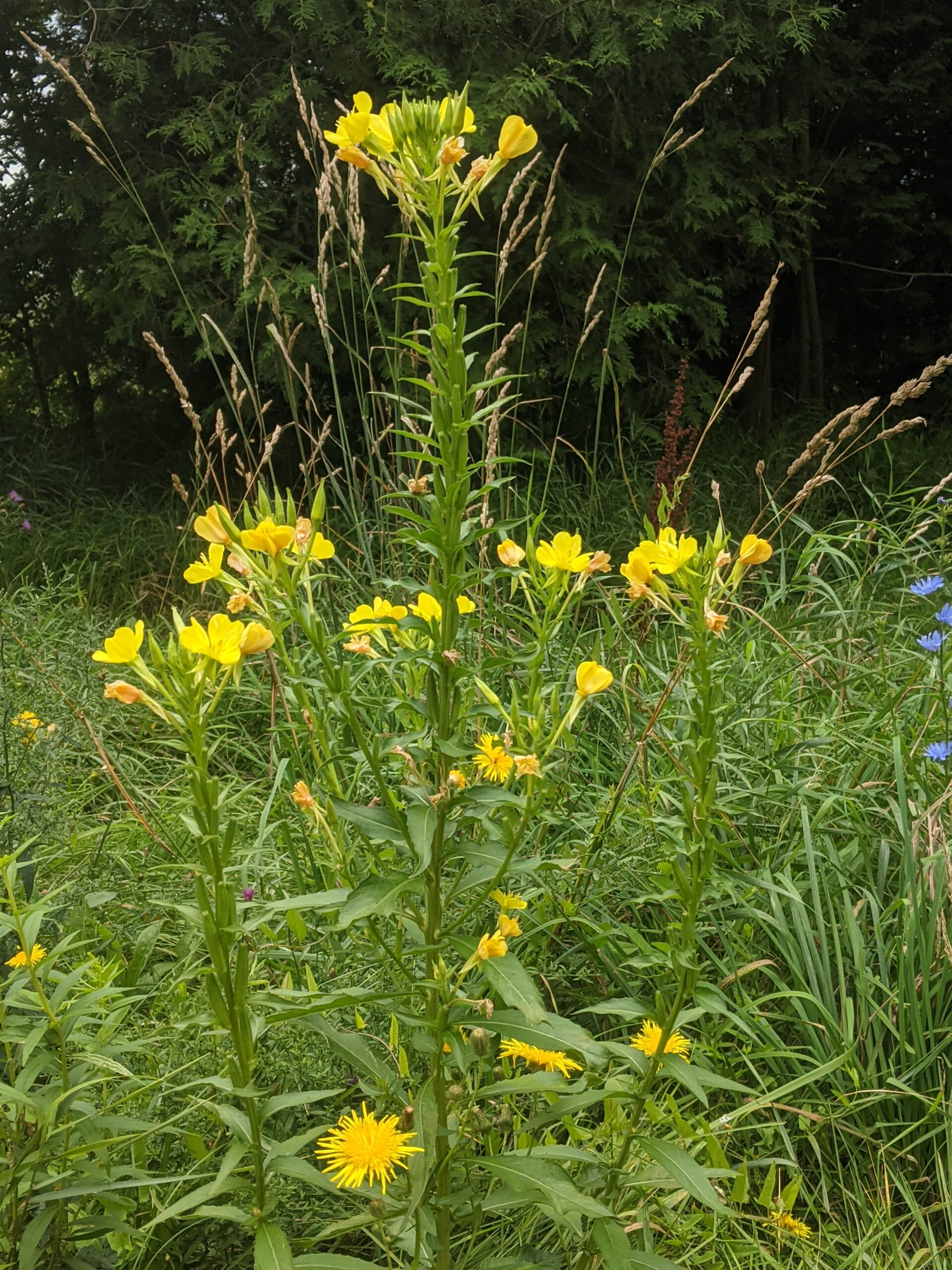
Common Evening Primrose: A Night-Blooming Native Wildflower
Common evening primrose (Oenothera biennis) is a striking North American wildflower known for its bright yellow blossoms and evening display. It can bring color and wildlife activity to sunny gardens, meadow plantings, and other naturalized spaces. Though often considered a garden plant, it also grows readily along roadsides, field edges, and other disturbed areas.
How to Identify Common Evening Primrose
This biennial plant usually spends its first year as a low rosette of leaves close to the ground. In its second year, it sends up a tall, branching flower stalk that may reach several feet in height. The leaves are lance-shaped and arranged alternately along the stem.
From summer into fall, the plant produces four-petaled, lemon-yellow flowers. The blossoms typically open in the evening and may remain open into the next morning. After flowering, elongated seed capsules form along the stem, eventually releasing numerous small seeds.
Wildlife Value
Evening primrose flowers offer nectar and pollen to a variety of insects. Their evening bloom makes them particularly accessible to nighttime pollinators, including some moths. The seeds are eaten by birds and other wildlife, while the plant’s foliage can provide food for certain insect larvae.
Because it readily produces seeds, common evening primrose can establish itself in suitable open areas. Allowing a few plants to mature can support wildlife, but removing seed capsules before they open can help limit unwanted spread.
Growing Common Evening Primrose
- Light: Full sun is best, though the plant can tolerate some light shade.
- Soil: It grows in a range of soils and generally prefers well-drained conditions.
- Water: Water young plants while they become established. Mature plants can tolerate relatively dry conditions.
- Planting: Sow seeds where you want the plants to grow, since the long taproot makes established plants difficult to transplant.
- Maintenance: Leave some seed capsules in place if you want the plant to reseed. Remove them before they open if you want to control its spread.
As a biennial, common evening primrose does not necessarily return from the same root each year. It often persists in a garden by reseeding, so its appearance may shift from one season to the next.
Where to Plant It
Common evening primrose suits sunny, informal areas such as pollinator gardens, native plantings, meadow edges, and roadside-style beds. Its tall stems and loose growth habit can make it less suitable for highly formal borders. Give it room, and consider pairing it with other plants that can provide structure as it finishes flowering.
In New Jersey, it can be a useful choice for gardeners interested in native wildflowers and wildlife-friendly planting. As with any vigorous self-seeder, observe how it behaves in your garden and remove seedlings where they are not wanted.
Edibility and Safety
Some parts of common evening primrose have been used as food, but plant identification must be certain before any wild plant is eaten. Never consume a plant unless it has been correctly identified and harvested from a clean, uncontaminated location. Traditional uses of evening primrose should not be treated as medical advice; consult a qualified health professional before using any plant product for health purposes.
A Flower for the Evening Garden
With its cheerful yellow flowers, adaptable nature, and value to pollinators, common evening primrose is a distinctive addition to a sunny, naturalistic garden. Its biennial life cycle and willingness to reseed make it best suited to gardeners who enjoy a little spontaneity—and who are happy to guide where the next generation grows.
Common Evening Primrose FAQs: Identification, Life Cycle, Edibility, Deer Resistance, and Invasiveness
- What is the difference between evening primrose and common evening-primrose?
- Is common evening primrose a perennial?
- What is the difference between evening primrose and common evening primrose?
- Do deer eat common evening primrose?
- Can you eat common evening-primrose?
- Is common primrose invasive?
- Is common evening primrose invasive?
- Is common evening-primrose a perennial?
What is the difference between evening primrose and common evening-primrose?
“Evening primrose” is a general name for plants in the genus Oenothera, which includes many species. “Common evening-primrose” usually refers specifically to Oenothera biennis, a biennial North American wildflower with yellow flowers that typically open in the evening. The hyphen is simply part of a common-name style; it does not indicate a different plant. Because common names can vary by region, the scientific name is the clearest way to identify a particular species.
Is common evening primrose a perennial?
Common evening primrose (Oenothera biennis) is a biennial, not a perennial. It typically grows as a low cluster of leaves in its first year, then flowers, sets seed, and dies in its second year. It may appear year after year in a garden because it readily reseeds, but individual plants usually live for only two growing seasons.
What is the difference between evening primrose and common evening primrose?
“Evening primrose” is a broad common name for many plants in the genus Oenothera, while “common evening primrose” usually refers to one particular species, Oenothera biennis. The plants share traits such as yellow flowers and, in some species, blooms that open in the evening, but they can differ in size, growth habits, and preferred conditions. Because common names vary by region and may be used for several species, check the scientific name when identifying or purchasing a plant.
Do deer eat common evening primrose?
Deer may browse common evening primrose, especially when other food is scarce, so it is not reliably deer-resistant. How much damage occurs can vary by location, season, and the plants available nearby. If deer pressure is high, protect young plants with fencing or repellents, and consider planting evening primrose among species deer tend to avoid.
Can you eat common evening-primrose?
Yes, common evening primrose (Oenothera biennis) is considered edible, and its young leaves, flowers, roots, and seeds have been used as food. Only eat it if the plant has been positively identified and gathered from an area free of pesticides, pollutants, and other contaminants. Try a small amount first, since wild foods can cause reactions, and don’t confuse eating the plant with taking evening primrose oil supplements.
Is common primrose invasive?
Common evening primrose (Oenothera biennis) is native to North America and is not generally considered invasive in its native range. However, it readily self-seeds and can spread quickly in sunny, disturbed areas, so it may behave like a weed in gardens. Remove unwanted seedlings or seed capsules before they mature, and check local guidance if you’re planting it outside its native range.
Is common evening primrose invasive?
Common evening primrose is native to much of North America, so it is generally not considered an invasive species in its native range. However, it readily self-seeds and can spread into open or disturbed areas, sometimes appearing where it isn’t wanted. To keep it in bounds, remove unwanted seedlings or cut off seed capsules before they release seeds.
Is common evening-primrose a perennial?
Common evening-primrose (Oenothera biennis) is a biennial, not a perennial. It typically grows as a low rosette of leaves in its first year, then flowers, produces seeds, and dies in its second year. It may seem to return year after year because it readily self-seeds, allowing new plants to grow nearby.