
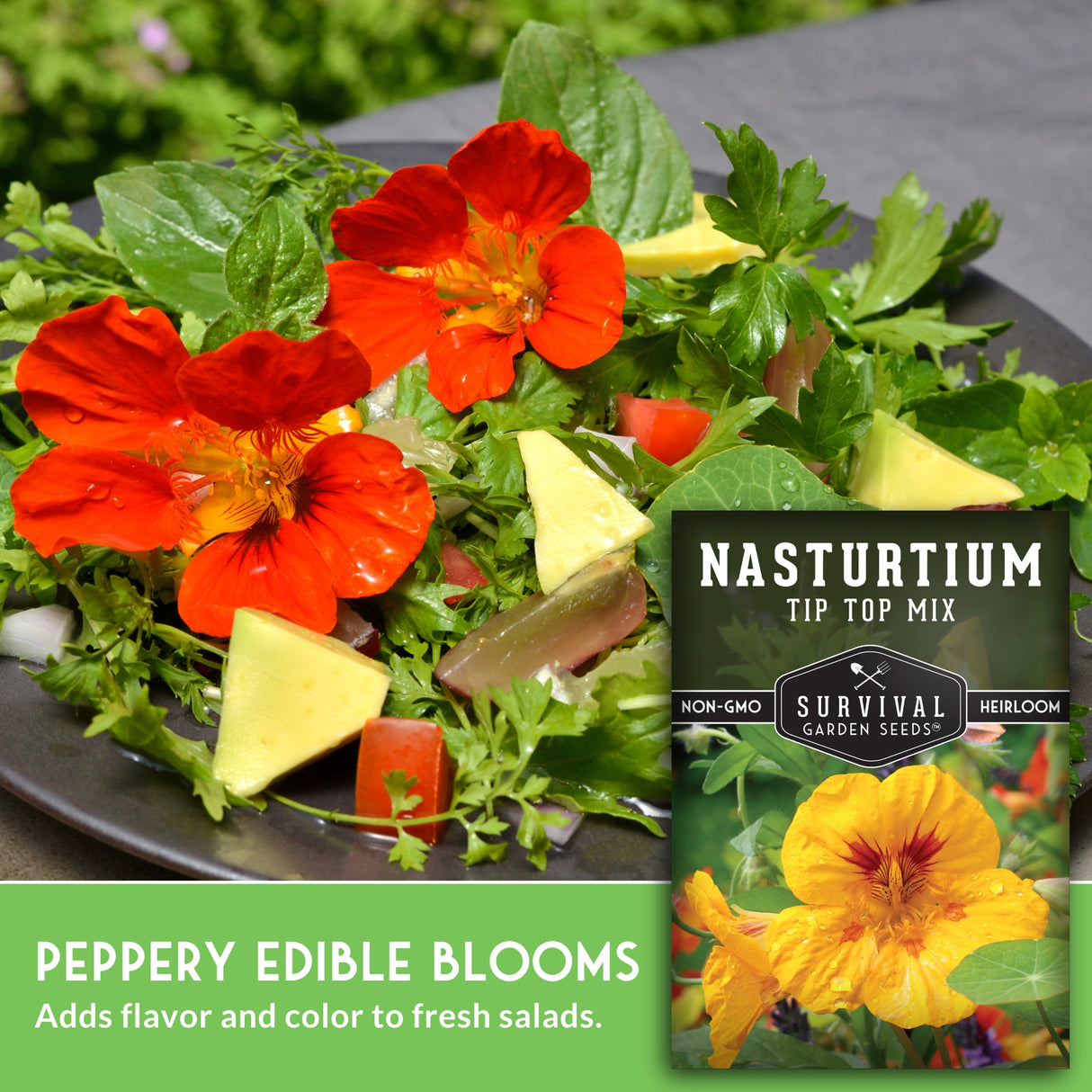
Nasturtium Seeds: How to Plant, Grow, and Save Them
Nasturtium seeds are large, easy to handle, and simple to grow, making them a good choice for beginner gardeners and children. The plants produce bright, jewel-toned flowers and rounded leaves, and many varieties are edible. With a sunny spot and well-drained soil, a packet of seeds can bring color and pollinator activity to a garden, container, or window box.
Choosing Nasturtium Seeds
Most garden nasturtiums are varieties of Tropaeolum majus. Seed catalogs often group them by growth habit. Compact or dwarf varieties form tidy mounds suited to pots, borders, and small spaces. Trailing and climbing types spread across the ground or climb a support, making them useful for hanging baskets, trellises, and informal ground cover. Check the seed packet for the variety’s mature size and growing habit before planting.
Nasturtiums come in shades of yellow, orange, red, and cream, sometimes with contrasting markings. Their flowers and leaves have a peppery flavor and can be used as edible garnishes. Only eat plants that have been grown without pesticides not labeled for edible crops, and make sure the plant has been correctly identified.
When and Where to Plant
Nasturtiums are commonly grown as warm-season annuals. Sow seeds outdoors after the danger of frost has passed and the soil has begun to warm. They can also be started indoors a few weeks before the last expected frost, but use biodegradable pots if possible: nasturtiums dislike having their roots disturbed during transplanting.
Choose a site with full sun for the most flowers. In hot climates, plants may appreciate some afternoon shade. Nasturtiums tolerate a range of soils but do best in well-drained ground. Rich soil and heavy applications of fertilizer can encourage leafy growth at the expense of flowers, so a moderately fertile or lean planting bed is usually suitable.
How to Sow Nasturtium Seeds
- Optional: Soak the seeds in lukewarm water overnight to soften their hard coats and encourage quicker, more even germination.
- Sow seeds about ½ to 1 inch deep, following the spacing on the seed packet. Compact varieties generally need less room than spreading or climbing types.
- Cover lightly with soil and water gently.
- Keep the soil evenly moist, but not waterlogged, until seedlings appear. Germination often takes about 7 to 14 days, depending on soil temperature and growing conditions.
After seedlings are established, water when the soil begins to dry. Avoid keeping the soil constantly wet, which can contribute to root problems. If you are growing a climbing variety, provide a trellis or other support while the plants are young.
Harvesting and Saving Nasturtium Seeds
Nasturtium flowers and young leaves can be picked as needed for salads and other dishes. For a caper-like condiment, harvest immature green seed pods and pickle them in vinegar and seasonings. Use a tested recipe and keep prepared pickles refrigerated unless the recipe provides approved canning instructions.
To save seeds for planting, leave some flowers on the plant. After flowering, the seeds develop in clusters. Collect them when they are plump and beginning to turn tan or brown, ideally before they fall to the ground. Spread the seeds in a single layer in a cool, dry, well-ventilated place until fully dry. Store them in a labeled paper envelope or other breathable container in a cool, dry location.
Saved seeds may not grow true to type if the plants were cross-pollinated with other nasturtium varieties nearby. For the best results, save seeds from healthy plants and label them with the variety and harvest date.
A Simple, Colorful Garden Favorite
Nasturtiums reward a small amount of care with vivid flowers, attractive foliage, and seeds that are easy to collect. Sow them directly in the garden once the weather warms, give them good drainage, and avoid overfeeding. Whether grown in a container, along a path, or over a trellis, nasturtiums are a cheerful and versatile addition to the garden.
Top 5 Benefits of Growing Nasturtium Seeds: Easy, Vibrant, and Versatile
- Easy to sow and grow.
- Germinate quickly in warm soil.
- Available in colorful, attractive varieties.
- Suitable for containers, beds, and trellises.
- Can be saved for future planting.
5 Challenges to Consider When Growing Nasturtium from Seeds
- Seeds may germinate slowly without soaking.
- Seedlings dislike root disturbance when transplanting.
- Plants can spread and crowd nearby plants.
- Wet soil may cause seeds or roots to rot.
- Saved seeds may not grow true to type.
Easy to sow and grow.
Nasturtium seeds are easy to sow and grow, making them a great choice for beginner gardeners. Their large size makes them simple to handle, and they can be planted directly in the garden once the danger of frost has passed. In warm, well-drained soil, they usually sprout within a week or two and need little more than sunlight and occasional watering to thrive.
Germinate quickly in warm soil.
Nasturtium seeds germinate quickly when planted in warm soil, so you won’t have to wait long to see seedlings emerge. Sow them outdoors after the soil has warmed in spring, and keep the soil lightly moist while the seeds sprout. Soaking the seeds overnight can help soften their hard coats and encourage more even germination.
Available in colorful, attractive varieties.
Nasturtium seeds are available in a wide range of colorful, attractive varieties, with blooms in shades of yellow, orange, red, and cream. Some flowers feature striking patterns or contrasting colors, while the plants themselves may grow as compact mounds or cascading vines. This variety makes it easy to find nasturtiums that brighten garden beds, containers, hanging baskets, and trellises.
Suitable for containers, beds, and trellises.
Nasturtium seeds are a versatile choice for many garden spaces. Compact varieties grow well in containers and flower beds, while trailing or climbing types can spill over the sides of pots or climb trellises. This flexibility makes it easy to enjoy their colorful blooms and foliage in gardens of different sizes and layouts.
Can be saved for future planting.
Nasturtium seeds are easy to save for future planting, making them a practical and budget-friendly choice for gardeners. Let a few flowers fade on the plant, then collect the plump seeds once they begin to dry and turn tan or brown. After drying them thoroughly in a cool, well-ventilated spot, store the seeds in a labeled paper envelope in a cool, dry place until planting time.
Seeds may germinate slowly without soaking.
Nasturtium seeds have a hard outer coat, so they may germinate slowly or unevenly if planted dry. Soaking them in lukewarm water overnight before planting can soften the coat and help seedlings emerge sooner, though germination time still varies with soil temperature and growing conditions.
Seedlings dislike root disturbance when transplanting.
Nasturtium seedlings can be sensitive to transplanting because their roots do not respond well to being disturbed. Moving them from a seed tray or pot may slow their growth or damage the plant, so it’s best to sow seeds directly in the garden after the last frost. If starting seeds indoors, use biodegradable pots and plant the seedlings pot and all to help keep the roots intact.
Plants can spread and crowd nearby plants.
Nasturtiums can spread quickly, especially trailing varieties, and may crowd nearby plants by covering their foliage and competing for light, water, and space. Give them room to grow, guide vines away from neighboring plants, and remove unwanted seedlings to keep them under control.
Wet soil may cause seeds or roots to rot.
Nasturtium seeds and young plants are vulnerable to overly wet soil. When the soil stays waterlogged, seeds may rot before they germinate, and developing roots can decay, leaving seedlings weak or causing them to die. Plant in well-drained soil, avoid overwatering, and wait until the top layer begins to dry before watering again.
Saved seeds may not grow true to type.
Saved nasturtium seeds may not produce plants that look like the parent, especially when different varieties grow nearby and cross-pollinate. The next generation may have different flower colors, growth habits, or other characteristics, which can be disappointing if you’re trying to preserve a particular variety. For consistent results, buy fresh seeds from a reliable supplier or grow only one variety when saving seeds.